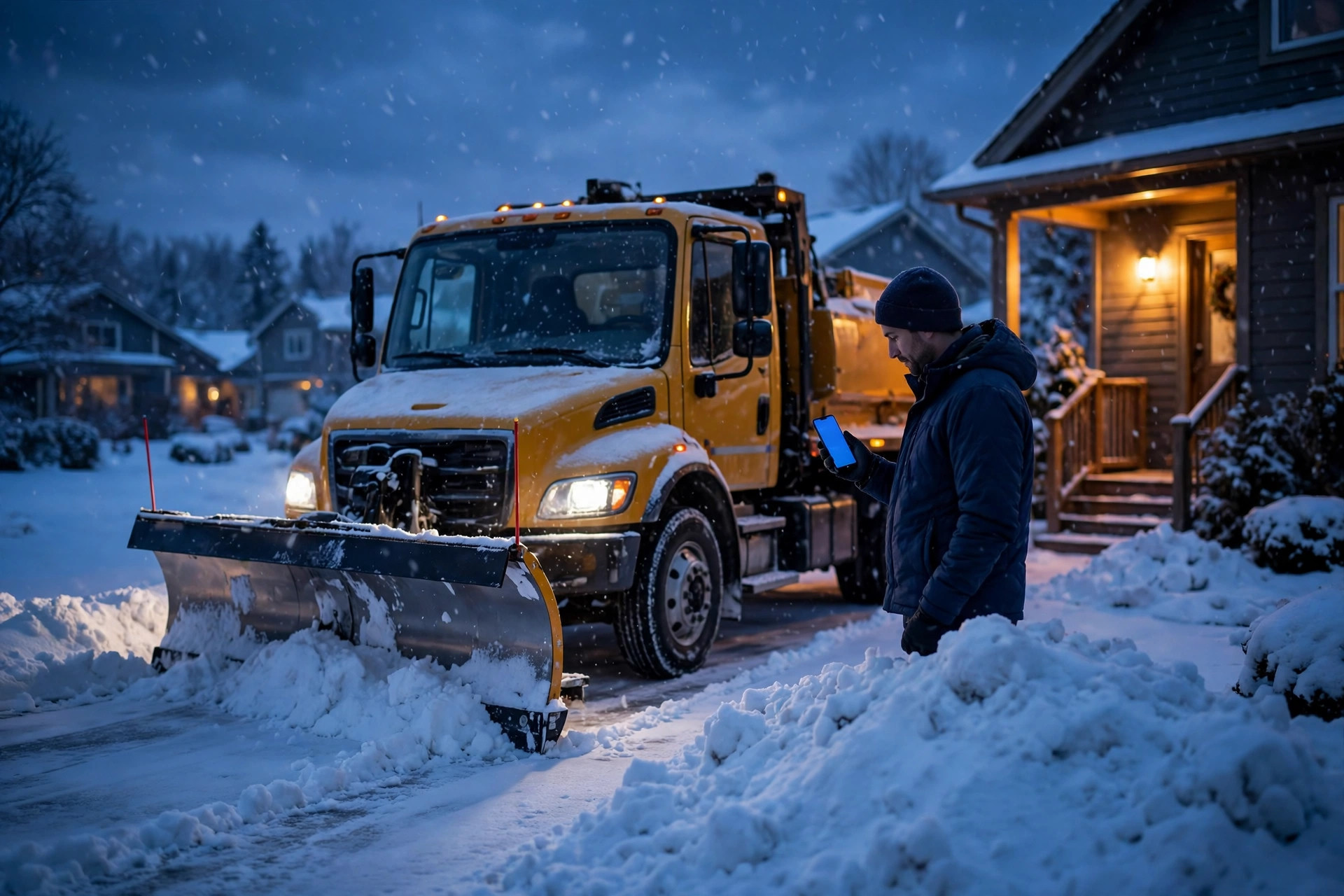
Why snow removal payments are different
A snow removal business does not get paid on a calendar — it gets paid on a forecast. The work arrives in storms, usually between November and April, and a quiet December can be followed by three back-to-back storms in January. That uneven rhythm is what makes getting paid harder than the plowing itself: forty driveways cleared in one night still need forty bills, and a seasonal contract signed in October still needs collecting in February.
Most snow businesses sell their work in two ways, and both need a different kind of payment setup. A seasonal contract is one price for the whole winter, taken as a deposit when the client signs and the rest in installments. Per-push work is priced per visit, often by snowfall depth, and billed after each storm. A business that runs both — and most do — needs an account that can handle a scheduled installment and a same-night charge without either one getting tangled.
Cash and paper checks made that harder: a check left in a snowy mailbox, a customer away for the winter, a property manager who needs an invoice before releasing payment. Taking payments online, through a verified account in the business's own name, removes the weather from the payment entirely.