← Back home

Food delivery

Verified accounts for US food delivery businesses taking online orders

Orders arrive through apps, marketplaces, and your own website — and the money arrives from all three at once. How to run it through one verified account, keep payouts tidy, and keep a clean paper trail.

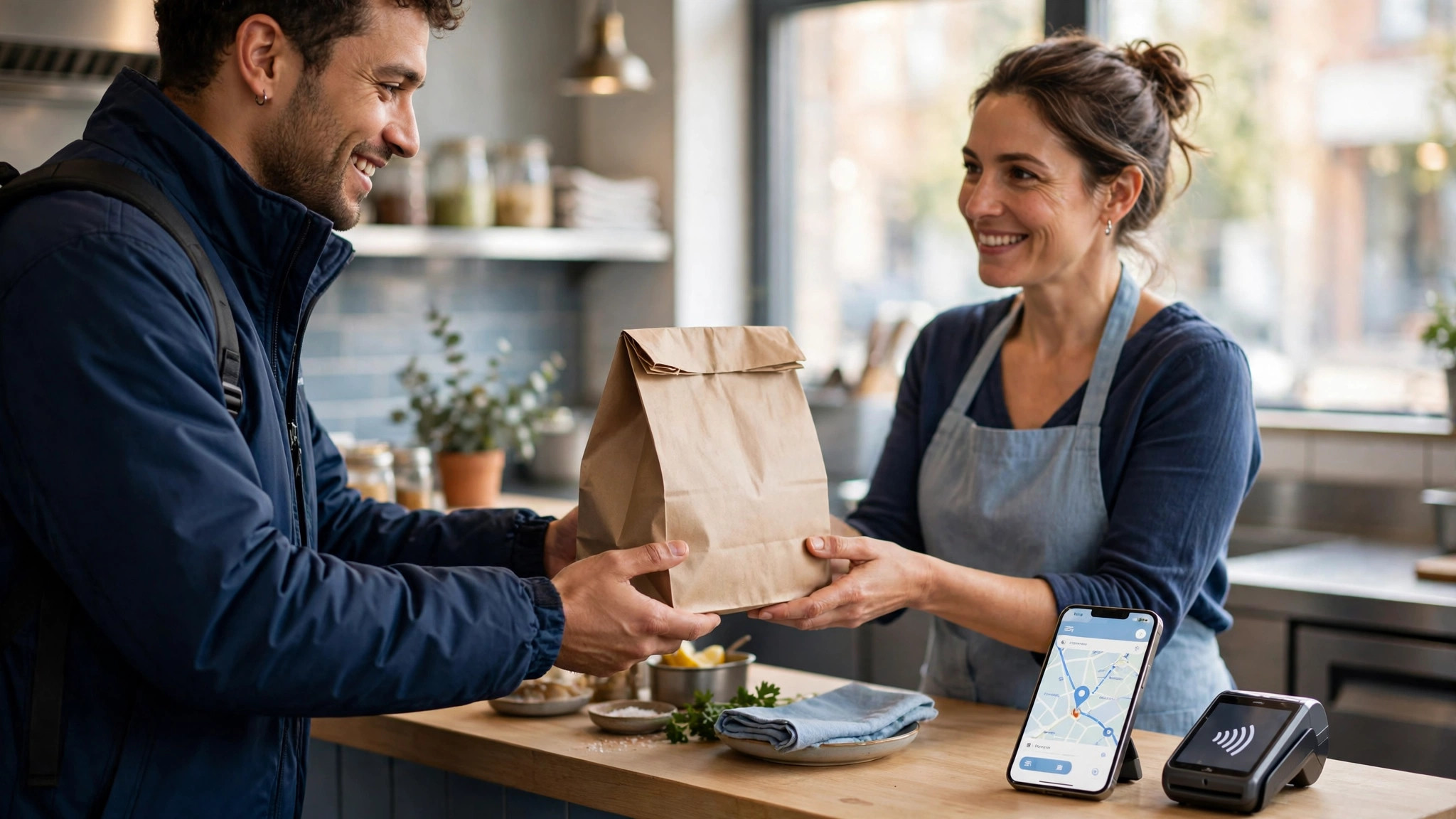
A food delivery courier receiving a takeout order from a restaurant owner

Online orders change what the account has to do

A food delivery business used to take money in one way: a customer paid at the counter or at the door. An online-order business takes money in three ways at once — through a delivery app, through a marketplace listing, and through its own website — and all three pay into the same account. That is convenient right up until something goes wrong, and then three different money streams make one confusing picture.

A verified account matters here because food delivery is a high-volume, low-ticket business. Dozens or hundreds of small payments arrive every day, and the platform behind the account watches for patterns: sudden spikes, refunds, and chargebacks. A verified account with complete business details, a matching legal name, and a consistent payout bank gives the platform fewer reasons to pause payouts for review in the middle of a busy week.

The first decision is simple but easy to get wrong: use one account for the food business and nothing else. Do not run a second business, a personal side hustle, or a family member's orders through the same account. When the account holds only food delivery money, every payout, fee, and refund on the statement belongs to the food business, and your bookkeeping becomes a matter of reading the statement instead of untangling it.

Keep the order money separate from the business money

The money that arrives from orders is not all yours to spend. Part of it belongs to the delivery platform as commission, part of it will go back out as refunds, and part of it is tax you will owe later. The most common mistake in food delivery bookkeeping is treating the full payout as profit on the day it lands and then being short when the costs arrive.

A practical rule is to move money out of the payout account on a fixed schedule and into separate places for separate purposes: the operating bank for day-to-day costs, and a tax reserve you do not touch. The exact split depends on your margins and your accountant's advice, but the habit matters more than the percentages. Money that is already moved is money that cannot be spent twice by accident.

Delivery platforms usually deduct their commission before the payout reaches you, so the amount that lands is already net of their fee. Your own website orders may arrive gross, with the payment processor's fee taken separately. Knowing which stream arrives net and which arrives gross is the difference between a statement that makes sense and one that never quite adds up. Check the payout detail for each channel once, write it down, and use that note every time you reconcile.

Payout timing: when the money actually lands

Not every order pays out on the same schedule. A marketplace may pay weekly, a delivery app may pay on a rolling basis a few days after each order, and your own website may pay on the processor's standard schedule. The same Friday can therefore bring money from last week's marketplace orders, this week's app orders, and a trickle of website orders — and none of it lines up neatly with the week the food was actually sold.

That mismatch is normal, but it means you should never judge a week by the payouts that landed in it. Judge a week by the orders you took and the payouts you are owed. Keep a simple record of what each channel owes you at the end of each week, and compare it against what actually arrives the following week. When a payout is late, you will spot it the same week instead of discovering it a month later.

If a payout is delayed, start with the channel's own payout page before contacting support: check whether the payout is marked as pending, whether a document or bank detail is being requested, and whether the payout bank on file is still the one you use. Most delays are a missing detail or a bank change, and the payout page usually says so plainly. Contact support only after you know exactly which payout is missing and by how much.

Refunds, cancelled orders, and missing items

Food delivery produces more refunds than most businesses, and that is not a sign of failure — it is the nature of hot food, tight delivery windows, and orders placed on a phone. A wrong item, a late courier, or a spill in transit will each produce a refund request, and the platform will usually take the refund out of your next payout rather than asking you to send money back.

Agree with yourself, before the first refund, how refunds are handled. The simplest approach is to treat every refund as a cost of the shared business, taken off the top before any profit is calculated. Trying to assign each refund to a person — the cook, the courier, the customer — turns a routine cost into a recurring argument. Track the refund rate per channel instead: if one channel produces far more refunds than the others, the problem is usually in that channel's menu, photos, or delivery settings, not in any one person.

Chargebacks are different from refunds and rarer, but they cost more. A chargeback happens when a customer disputes the payment with their bank instead of asking you for a refund. Keep the order record for every delivery — the order time, the items, the delivery confirmation — because that record is what you send if a chargeback is disputed. An order you cannot document is an order you will lose. Most platforms keep these records for you; make sure you know where to find them and how long they are kept.

Fees you can see before they surprise you

Food delivery fees stack up quietly because each one is small. A marketplace commission, a payment processing fee, a delivery fee share, and a small per-order service charge can each look reasonable on their own and add up to a large share of every order together. The only way to keep them under control is to read the fee schedule for each channel once, in full, and to re-read it whenever the channel announces a change.

Watch for the fees that do not appear on the order itself. Some channels charge a monthly fee, some charge for promoted placement in search results, and some charge extra for orders above a certain size or below a minimum. A fee that appears on the monthly statement but never on an individual order is the easiest one to miss, and the most likely to grow unnoticed.

Once a month, add up what each channel actually cost you and divide it by what that channel actually paid you. That one ratio tells you whether a channel is earning its place. A channel that brings in a lot of orders but keeps a large share of them may be worth less than a smaller channel that keeps less. Numbers beat feelings here, and the calculation takes less time than one delivery run.

  • Marketplace commission — the share the platform keeps from each order.
  • Payment processing fee — the card or wallet fee on each payment.
  • Service and small-order fees — charges that appear per order or per month.
  • Promoted placement — optional fees for appearing higher in search results.

Delivery partners and marketplace payouts

Many food businesses do not employ their own couriers. They rely on the delivery app's couriers, or on a marketplace that handles delivery itself. That keeps the business simple, but it also means the money path has an extra step: the customer pays the platform, the platform keeps its share, and the rest reaches you on the platform's schedule, not yours.

When you list on more than one marketplace, each one pays on its own schedule and takes its own commission. Do not compare them by order count alone — compare them by what actually lands in your account per order, after every fee. A marketplace that sends fifty orders a week and keeps a large commission may pay you less than one that sends thirty orders and keeps less.

If you also take orders on your own website, that channel is the one you control most. You set the menu, the delivery area, and the payout schedule through your payment processor. It usually brings fewer orders than the big marketplaces, but the money per order is usually higher because there is no marketplace commission. Many food businesses treat their own website as the slow, steady channel and the marketplaces as the volume channels, and they check both numbers every month to keep the balance honest.

Records that keep tax season simple

Food delivery creates a paper trail whether you want one or not: every order, every payout, every fee, and every refund is recorded somewhere by the platform. The question is only whether you can find it all when you need it. Keep one folder — digital is fine — where every channel's monthly statement lands, and download the statements instead of relying on the platform to keep them forever.

For each month, keep three things: the platform's payout statement, your own record of orders taken, and the bank statement showing the payouts landing. If those three agree, tax season is a matter of handing the folder to your accountant. If they disagree, you have a month to find the difference instead of a year of differences to untangle at once.

Also keep the records that platforms do not keep for you: the cost of ingredients, packaging, and delivery supplies, and any refunds you issued directly to a customer outside the platform. Those costs are part of the business, and they are the ones most often forgotten because they were paid in cash or on a personal card. A quick photo of the receipt into the folder on the day you buy is enough — the habit matters more than the system.

A weekly routine that takes fifteen minutes

Food businesses run on routine, and the account side is no different. Once a week, at the same time, do four things: check that every channel paid what it owed, note any refunds or chargebacks, move the week's profit out of the payout account, and glance at the fee totals. Fifteen minutes, once a week, is enough — and it is the routine that catches problems while they are still small.

The weekly check is also the moment to notice patterns. A sudden rise in refunds on one channel, a payout that is smaller than the orders justify, or a fee that appears for the first time are all things you will see in a weekly check and miss entirely if you only look at the account once a month. Write down anything odd the same day, even if it is only one line, so you remember what you saw and when you saw it.

Finally, keep the account details current. If the business changes its bank, its phone number, its legal name, or its address, update the account the same week. Platforms ask for re-verification when the details on file stop matching the business they see, and a re-verification request that arrives during a busy weekend is far more disruptive than the five minutes it takes to update a phone number on a quiet Tuesday.

Mistakes that cost food businesses money

  • Mixing food business money with a personal account or a second business.
  • Treating the full payout as profit before fees, refunds, and tax are set aside.
  • Judging a week by the payouts that landed, not the orders actually taken.
  • No record of which channel arrives net of commission and which arrives gross.
  • Ignoring the monthly fee total — the small charges that add up quietly.
  • Letting refunds become arguments instead of treating them as a tracked cost.
  • Losing order records, so a chargeback cannot be defended.
  • Out-of-date bank or contact details triggering a re-verification at the worst time.

One payout account

One verified account for the food business only — no personal money, no second business mixed in.

One paper trail

Platform statements, order records, and bank statements in one folder, checked every week.

One weekly check

Fifteen minutes a week: payouts owed versus payouts received, refunds, fees, and profit moved out.

This guide is educational and does not constitute financial, tax, or legal advice. Payout schedules, fees, tax treatment, and record-keeping requirements vary by platform and jurisdiction — consider speaking with a qualified accountant or attorney about your specific situation.

Ready to buy with confidence?

Every account in our catalog runs through the same QA checks before it reaches you. Ask us anything before you order.