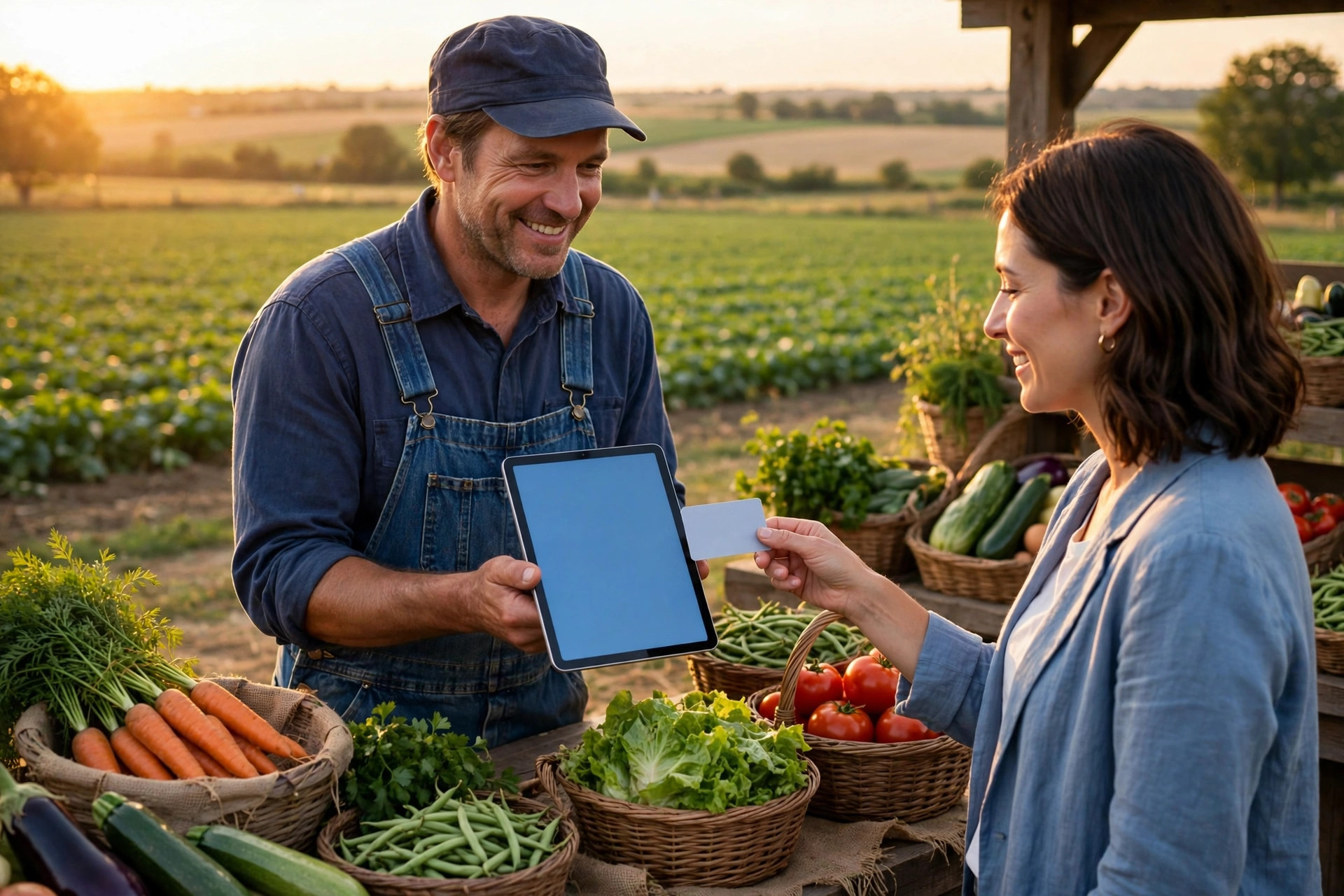
Why direct sales changed the payment question
A farm stand that only takes cash turns away every customer who left their wallet in the truck but still has a phone in their pocket. Direct sales — farm stands, community-supported agriculture shares, farmers market stalls, and a farm's own online store — have quietly become card-first businesses, even in rural counties where cash once ruled every transaction.
The shift is not about fashion. Customers who buy direct expect the same checkout they get everywhere else: tap a card, pay with a phone, get a receipt by text or email. When the payment step feels awkward, some of those customers simply buy less, or buy from the next stall over. For a farm working on thin margins, that lost sale is rarely visible — it just never happens.
That is where a verified payment account earns its keep. Verification is the process a payment platform uses to confirm who you are and that your business is real: your legal name, your farm business name, your tax identification number, and a bank account in the business name. Once that check is complete, the platform treats your account as established, which usually means fewer holds, faster payouts, and a smoother experience for the people buying your produce.